Year: 2025
Location: Prague
curator: Filip Landa
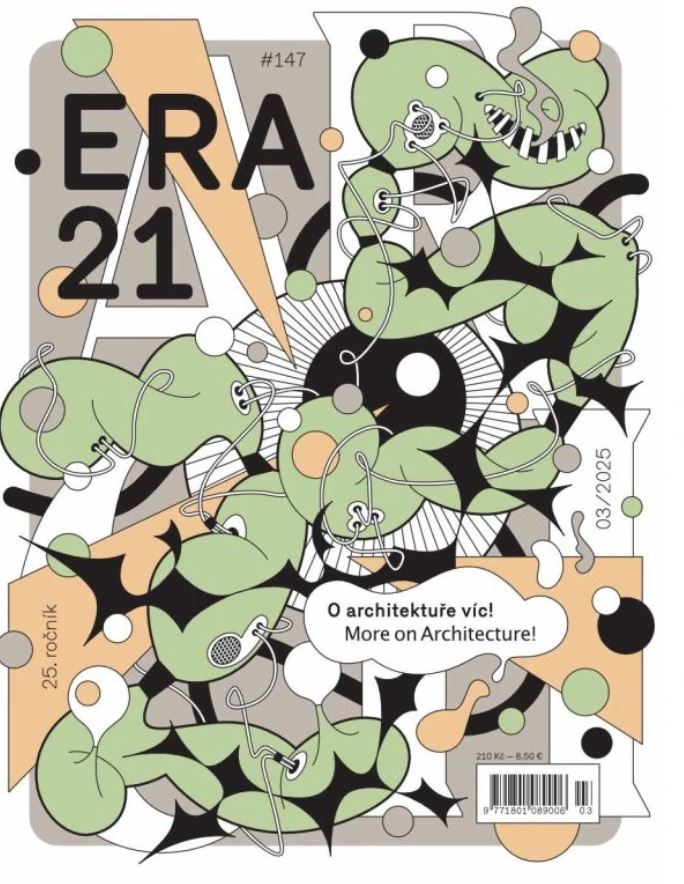
magazine: ERA21
In the new issue of ERA21 – Revision, I contributed to the Generation 2050 survey curated by editor-in-chief Filip Landa. Alongside a group of emerging architects and urbanists, I was invited to speculate on the possible futures of both architecture and the architectural magazine as cultural formats in the year 2050.
Rather than focusing on technological innovation or technical models of sustainability, my text revisits the most elementary epistemological and relational questions of architecture: How do we speak and write about architecture? For whom is it produced? And in what ways do architectural interventions shape not only human environments but also multispecies relations and ecological interdependencies?
Although we often describe our present as “modern,” the conceptual language of architecture—along with its pedagogical frameworks and the narratives circulated by media, institutions, and clients—remains embedded in inherited paradigms that no longer adequately reflect contemporary ecological and social realities. If sustainability is to function as more than a technical category or certification system, it must also address processes of loss, erasure, and silencing that accompany every act of construction. This requires an expanded ethical awareness of the material, cultural, and ecological layers that architecture inevitably transforms, as well as a renewed sensitivity toward the non-human worlds on which human habitation depends.
In this sense, architecture cannot be reduced to the domain of buildings alone. It also emerges through performative, philosophical, anthropological, and narrative practices that reconfigure how collective life is imagined and experienced. Precisely for this reason, such interdisciplinary and speculative approaches deserve a more explicit and sustained presence within architectural discourse and its publishing platforms.

Mezi vrstvami míst
Často, když čtu články o architektuře,
mluví se hlavně o tom, co bylo postaveno.
O soutěžích, návrzích, materiálech, formách.
O vítězích, kontextu, rozpočtech.
Architekti a architektky vystupují,
za nimi vizualizace,
nebo fotografie reprezentativní budovy.
A za tím obrazem je ticho,
které zůstává neslyšené.
Ticho příběhů těch,
kteří míchali beton v horku i dešti.
Ticho kroků těch,
kteří místem denně procházeli.
Ticho těch, kteří nebyli vidět,
a přesto spoluutvářeli.
O těchto příbězích se skoro nepíše.
Stále častěji se mluví o udržitelnosti —
o recyklaci, alternativních způsobech výstavby,
použití místních materiálů, technologii
na ochranu životního prostředí.
Ale čím víc těch slov slyším,
tím víc přemýšlím o tom,
co vlastně udržujeme a pro koho.
Protože když stavíme,
hloubíme jámu do země,
narušujeme rovnováhu toho, co v ní žije,
ovlivňujeme krajinu a její vzácné zdroje.
Zdá se mi, že to, co je skutečně udržitelné,
začíná ve vztazích.
Ve vztazích, které nejsou jen mezi lidmi,
ale i s místy, s půdou, s počasím,
a s tím, co umírá a roste.
V redefinování vztahu člověka k prostředí.
V péči, která je pomalá, každodenní, neviditelná. Ve společném hledání,
které překračuje obory i mocenské hierarchie. V participaci, která není jen metodou,
ale způsobem vzájemného bytí. Ve vzdělávání, jež otevírá
alternativní způsoby vnímání architektury.
A také v tom, jak o architektuře mluvíme,
protože udržitelnost je i v jazyce.
Představuji si časopis architektury,
který není katalogem staveb,
ale prostorem pro čtení
a vyprávění o místech různými způsoby.
Kde mohou zaznít:
– zápisky dělníka
– dětské kresby o potenciálu místa
– fotografie místa ve čtyřech ročních obdobích
– záznamy site-specific performance
– způsoby jak místo ozdravovat
Místo, kde není architektura jen o návrhu a realizaci,
ale o vnímání, péči a soužití.
O každodenních dějích,
které dotvářejí prostor mimo půdorysy.
Takové děje jsou všude kolem nás:
zahrada, o kterou někdo pečuje bez povolení,
zarostlý pozemek, který si žije vlastním životem,
plachta napnutá mezi stromy jako dočasný úkryt,
lavice, na které se každý den potkají tři lidé,
plevel, který přetrvává,
procházka, která mění pohled.
Tyto okamžiky často zůstávají nepostřehnuté —
přesto prostor oživují a formují.
Vyprávět o nich je způsob,
jak místo číst a cítit,
navazovat s ním vztah,
dotýkat se jeho skrytých vrstev,
objevovat a sdílet je společně.
Chtěla bych číst časopis,
kde zaznívají hlasy a spekulace
zahradnic, dětí, pečovatelek, seniorek, uprchlic,
lidí bez domova, cizinců, městských úřednic..
A nejen hlasů lidí, ale i těch více-než-lidských,
které obývají prostor s námi.
Představme si,
že se díváme na město očima jiných druhů:
Ohrožuje skleněné zábradlí na vikýřích ptáky?
Jaký dopad má rozpálené náměstí na život hmyzu?
Kam dopadá stín během parného dne?
Jak asfalt mění prostředí pro jitrocel?
Je důležité taky psát a sdílet příběhy o tom,
jak různé druhy žijí společně:
jak se navzájem chrání,
podporují v růstu a vytvářejí útočiště.
Prostor není jen stavba, není jen tvar.
Je to místo, co nese stopy a proměny,
staré i nové vrstvy paměti.
Jako architektka
pozoruju spíš pohyb a vztahy v prostoru
než jeho samotný tvar.
Kroky člověka, který krouží náměstím,
protože tu chybí lavička.
Děti, které si z křoví dělají dům.
Staré trámy skryté pod novou omítkou.
Socha na fasádě, kterou nikdo nevidí.
Zazděný otvor ve zdi, kde dřív bylo okno.
Zaznamenávám místa, která jsou mezi místy.
Divná, opomíjená, přehlížená.
Píšu si je do zápisníku,
někdy jim vymýšlím příběhy.
Dávám jim hlas a formu,
která možná není vidět,
ale dá se cítit.
Někdy je to performativní gesto,
návrh prostoru,
rozhovor s obyvateli,
participativní dílna,
spekulativní fikce,
která sdílí možné příběhy místa i jeho aktérů.
Někdy jen poslouchám.
Dovoluji prostoru, aby mluvil sám za sebe.
Otevírám prostor pro imaginaci a další příběhy.
Chtěla bych číst časopis o architektuře
jako návod:
jak zpomalit,
jak vnímat prostor, jak spolu-tvořit,
a pěstovat vztahy.
kde stavby nejsou jen vzpomínky,
ale i příležitosti k učení a přehodnocování.
Učí nás nahlížet kriticky,
zkoumat, co se povedlo a nepovedlo,
hledat odpovědi
na současné společenské výzvy a krize,
v pohybu, v scénografii,
ve výstavách, umění, literatuře,
ve filozofii a dalších oborech,
kde se architektura projevuje
jako součást myšlení a praxe.
Časopis, kde se prostor otevírá dialogu,
není jen kulisou,
ale živým organismem
plným vrstev, hlasů, potřeb a příběhů.
ENG:
Between the Layers of Space
Often, when I read articles about architecture,
they mostly talk about what was built.
About competitions, designs, materials, forms.
About winners, context, budgets.
Architects appear,
behind them visualizations,
or photographs of a representative building.
And behind that image is silence,
which remains unheard.
The silence of the stories of those
who mixed concrete in heat and rain.
The silence of the steps of those
who walked through the place every day.
The silence of those who were not seen,
and yet helped shape it.
Almost nothing is written about these stories.
More and more, people talk about sustainability —
about recycling, alternative ways of building,
the use of local materials, technology
for protecting the environment.
But the more of these words I hear,
the more I think about
what we're actually sustaining, and for whom.
Because when we build,
we dig a pit into the ground,
we disturb the balance of what lives there,
we affect the landscape and its scarce resources.
It seems to me that what is truly sustainable
begins in relationships.
In relationships that are not only between people,
but also with places, with soil, with weather,
and with what dies and what grows.
In redefining the human relationship to environment.
In care that is slow, everyday, invisible.
In shared searching
that crosses disciplines and hierarchies of power.
In participation that is not just a method,
but a way of being together.
In education that opens up
alternative ways of perceiving architecture.
And also in how we talk about architecture,
because sustainability lives in language too.
I imagine an architecture magazine
that isn't a catalogue of buildings,
but a space for reading
and telling about places in different ways.
Where these could sound out:
– a worker's notes
– children's drawings of a place's potential
– photographs of a place across the four seasons
– records of site-specific performance
– ways of healing a place
A place where architecture isn't only about design and realization,
but about perceiving, caring, and coexisting.
About everyday happenings
that shape space beyond floor plans.
Such happenings are all around us:
a garden someone tends without permission,
an overgrown lot living its own life,
a tarp stretched between trees as a temporary shelter,
a bench where three people meet every day,
a weed that persists,
a walk that changes how you see.
These moments often go unnoticed —
yet they bring the space to life and shape it.
To tell about them is a way
of reading and feeling a place,
of building a relationship with it,
of touching its hidden layers,
of discovering and sharing them together.
I would like to read a magazine
where the voices and speculations sound out
of gardeners, children, caregivers, elderly women, refugee women,
homeless people, foreigners, city clerks —
and not only human voices, but also the more-than-human ones
that inhabit space alongside us.
Let's imagine
looking at the city through the eyes of other species:
Does the glass railing on the dormer windows endanger birds?
What effect does a scorching square have on insect life?
Where does the shade fall on a sweltering day?
How does asphalt change the environment for the plantain weed?
It's also important to write and share stories about
how different species live together:
how they protect one another,
support each other's growth, and create refuge.
Space is not just a structure, not just a form.
It is a place that carries traces and transformations,
old and new layers of memory.
As an architect
I observe movement and relationships in space
more than its shape alone.
The steps of a person circling a square
because there's no bench here.
Children who make a house out of the bushes.
Old beams hidden beneath new plaster.
A statue on the façade that no one sees.
A bricked-up opening in a wall where a window used to be.
I record the places that are between places.
Strange, neglected, overlooked.
I write them into my notebook,
sometimes I invent stories for them.
I give them a voice and a form
that maybe can't be seen,
but can be felt.
Sometimes it's a performative gesture,
a design for a space,
a conversation with residents,
a participatory workshop,
speculative fiction
that shares possible stories of a place and its actors.
Sometimes I just listen.
I let the space speak for itself.
I open up space for imagination and further stories.
I would like to read a magazine about architecture
like an instruction manual:
how to slow down,
how to perceive space, how to co-create,
and how to cultivate relationships,
where buildings are not just memories,
but also opportunities for learning and reassessment.
They teach us to look critically,
to examine what worked and what didn't,
to search for answers
to today's social challenges and crises,
in movement, in scenography,
in exhibitions, art, literature,
in philosophy and other fields,
where architecture reveals itself
as part of thought and practice.
A magazine where space opens itself to dialogue,
is not merely a backdrop,
but a living organism
full of layers, voices, needs, and stories.
Between the Layers of Space
Often, when I read articles about architecture,
they mostly talk about what was built.
About competitions, designs, materials, forms.
About winners, context, budgets.
Architects appear,
behind them visualizations,
or photographs of a representative building.
And behind that image is silence,
which remains unheard.
The silence of the stories of those
who mixed concrete in heat and rain.
The silence of the steps of those
who walked through the place every day.
The silence of those who were not seen,
and yet helped shape it.
Almost nothing is written about these stories.
More and more, people talk about sustainability —
about recycling, alternative ways of building,
the use of local materials, technology
for protecting the environment.
But the more of these words I hear,
the more I think about
what we're actually sustaining, and for whom.
Because when we build,
we dig a pit into the ground,
we disturb the balance of what lives there,
we affect the landscape and its scarce resources.
It seems to me that what is truly sustainable
begins in relationships.
In relationships that are not only between people,
but also with places, with soil, with weather,
and with what dies and what grows.
In redefining the human relationship to environment.
In care that is slow, everyday, invisible.
In shared searching
that crosses disciplines and hierarchies of power.
In participation that is not just a method,
but a way of being together.
In education that opens up
alternative ways of perceiving architecture.
And also in how we talk about architecture,
because sustainability lives in language too.
I imagine an architecture magazine
that isn't a catalogue of buildings,
but a space for reading
and telling about places in different ways.
Where these could sound out:
– a worker's notes
– children's drawings of a place's potential
– photographs of a place across the four seasons
– records of site-specific performance
– ways of healing a place
A place where architecture isn't only about design and realization,
but about perceiving, caring, and coexisting.
About everyday happenings
that shape space beyond floor plans.
Such happenings are all around us:
a garden someone tends without permission,
an overgrown lot living its own life,
a tarp stretched between trees as a temporary shelter,
a bench where three people meet every day,
a weed that persists,
a walk that changes how you see.
These moments often go unnoticed —
yet they bring the space to life and shape it.
To tell about them is a way
of reading and feeling a place,
of building a relationship with it,
of touching its hidden layers,
of discovering and sharing them together.
I would like to read a magazine
where the voices and speculations sound out
of gardeners, children, caregivers, elderly women, refugee women,
homeless people, foreigners, city clerks —
and not only human voices, but also the more-than-human ones
that inhabit space alongside us.
Let's imagine
looking at the city through the eyes of other species:
Does the glass railing on the dormer windows endanger birds?
What effect does a scorching square have on insect life?
Where does the shade fall on a sweltering day?
How does asphalt change the environment for the plantain weed?
It's also important to write and share stories about
how different species live together:
how they protect one another,
support each other's growth, and create refuge.
Space is not just a structure, not just a form.
It is a place that carries traces and transformations,
old and new layers of memory.
As an architect
I observe movement and relationships in space
more than its shape alone.
The steps of a person circling a square
because there's no bench here.
Children who make a house out of the bushes.
Old beams hidden beneath new plaster.
A statue on the façade that no one sees.
A bricked-up opening in a wall where a window used to be.
I record the places that are between places.
Strange, neglected, overlooked.
I write them into my notebook,
sometimes I invent stories for them.
I give them a voice and a form
that maybe can't be seen,
but can be felt.
Sometimes it's a performative gesture,
a design for a space,
a conversation with residents,
a participatory workshop,
speculative fiction
that shares possible stories of a place and its actors.
Sometimes I just listen.
I let the space speak for itself.
I open up space for imagination and further stories.
I would like to read a magazine about architecture
like an instruction manual:
how to slow down,
how to perceive space, how to co-create,
and how to cultivate relationships,
where buildings are not just memories,
but also opportunities for learning and reassessment.
They teach us to look critically,
to examine what worked and what didn't,
to search for answers
to today's social challenges and crises,
in movement, in scenography,
in exhibitions, art, literature,
in philosophy and other fields,
where architecture reveals itself
as part of thought and practice.
A magazine where space opens itself to dialogue,
is not merely a backdrop,
but a living organism
full of layers, voices, needs, and stories.